Listeners:
Top listeners:
-
 play_arrow
94.3 Rev-FM The Rock of Texas | Where Texas Rocks
-
 play_arrow
99.1 The Buck Texas Country's Number 1 Country
-
 play_arrow
103.7 MikeFM Your Texas Hill Country Mix Tape
-
play_arrow
KERV 1230 AM
-
 play_arrow
JAM Sports 1 JAM Broadcasting Sports 1
-
play_arrow
JAM Sports 2 JAM Broadcasting Sports 2


US oil reserve hits 44-year-low amid Iran war, global energy shortage
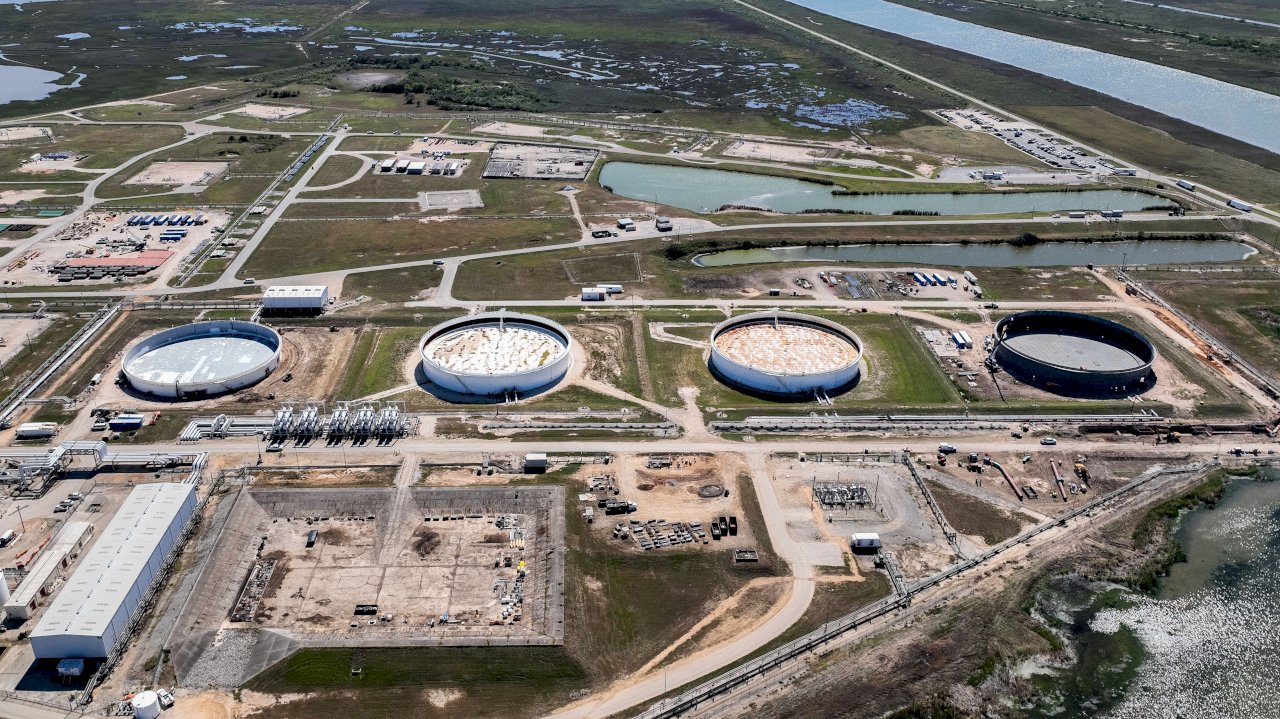
(NEW YORK) — The U.S. Strategic Petroleum Reserve has dropped to its lowest level since 1982, Department of Energy data this week showed, revealing the continued drawdown of emergency oil as the nation weathers a global energy shortage.
The reserve shrank by more than 3 million barrels of oil over the week ending on Aug. 28, the DOE said, leaving the stockpile at 286.6 million barrels or about 40% of overall capacity.
The largest global oil supply disruption on record has catapulted U.S. gasoline prices above $4 a gallon, rekindled inflation and helped set the stage for November’s midterm elections.
At one point, global oil prices climbed above $92 a barrel on Tuesday, after the United Kingdom Maritime Trade Operations said late Monday it had received reports of an oil tanker having been struck by three projectiles off the coast of Oman.
Established after the Arab Oil Embargo triggered an energy crisis in the early 1970s, the Strategic Petroleum Reserve provides an emergency source of oil that is intended to protect the U.S. against a sudden supply crunch.
The reserve, which can reach as many as 714 million barrels, is stored in large, high-security underground salt caverns along the gulf coastlines of Louisiana and Texas.
The president retains wide discretion to release oil from the reserve when the statutory conditions under the Energy Policy and Conservation Act are met. In such cases, the U.S. sells the oil on the open market, which in theory should bring oil prices down by increasing supply.
Days after the outbreak of the Iran war in late February, the International Energy Agency (IEA) said its 32 member nations, including the U.S., would release a combined 400 million barrels of reserve oil. When completed, the move would amount to the largest oil release in the IEA’s history, the group said at the time.
The U.S. said at the time it would release 172 million barrels from its reserve over as part of the EIA commitment. So far, the U.S. has released about 128 million barrels of reserve oil since the war began, according to data compiled by the U.S. Energy Information Administration, a government agency.
Before the Iran war, the U.S. had put petroleum on the market under emergency conditions four times since it was founded in 1975, according to the DOE.
Most recently, President Joe Biden authorized the release of 180 million barrels over six months in March 2022 after a spike in oil prices that followed the Russian invasion of Ukraine.
Copyright © 2026, ABC Audio. All rights reserved.
Top popular

Ingram man charged with murder after fatal shooting

Kerr Crime Stoppers offering reward up to $5,000 for information in last week’s non-viable school threat

KISD asks parents to communicate with children about words and actions after ‘copy cat’ threat note found at middle school

City of Kerrville Parks and Recreation reminds citizens that a Red Flag Warning is in effect until further notice

City of Kerrville says that May 7 General and Special Elections will proceed