Listeners:
Top listeners:
-
 play_arrow
94.3 Rev-FM The Rock of Texas | Where Texas Rocks
-
 play_arrow
99.1 The Buck Texas Country's Number 1 Country
-
 play_arrow
103.7 MikeFM Your Texas Hill Country Mix Tape
-
play_arrow
KERV 1230 AM
-
 play_arrow
JAM Sports 1 JAM Broadcasting Sports 1
-
play_arrow
JAM Sports 2 JAM Broadcasting Sports 2


Bryan Kohberger’s family says they support his attempt to challenge conviction
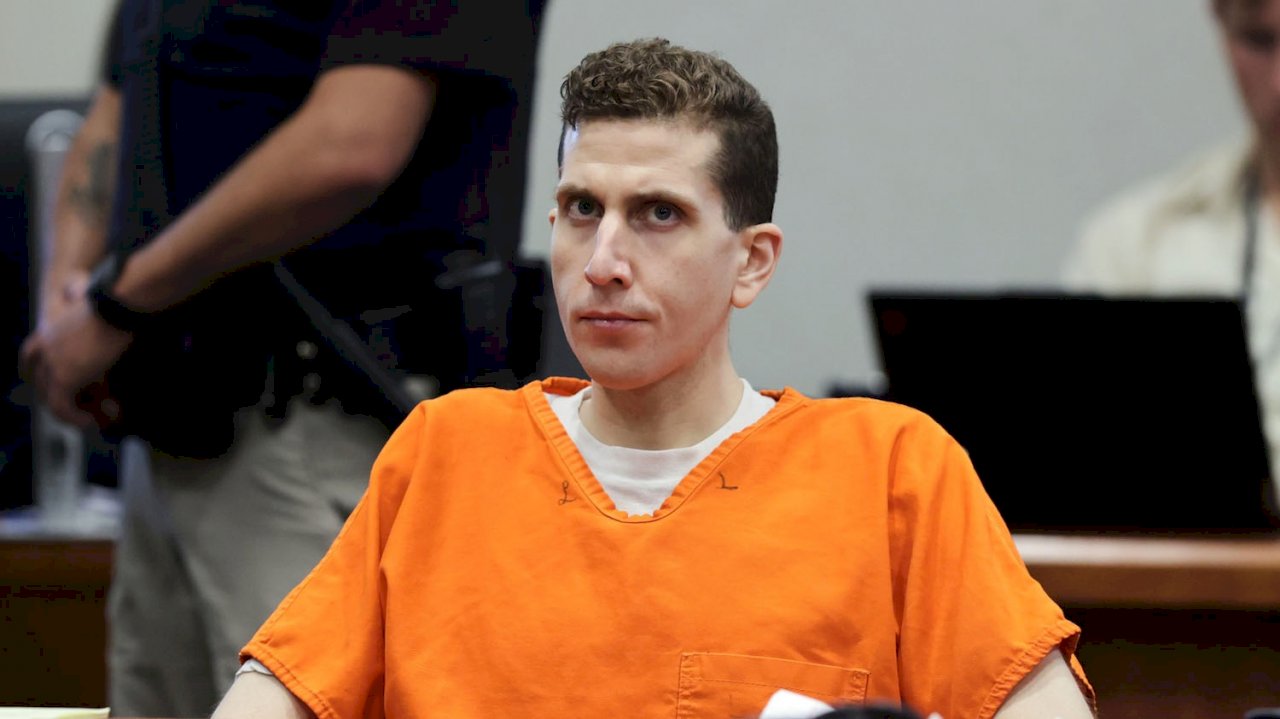
(NEW YORK) — The family of Bryan Kohberger is supporting his efforts to challenge his 2025 conviction, saying in a statement exclusive to ABC News, “Our full support of Bryan’s decision to pursue post-conviction relief does not come from a place of disregard.”
Kohberger, who is currently serving four consecutive life sentences for killing four college students in Idaho, said in his petition that the circumstances of his plea deal are now suspect because, among other things, he was “convinced to falsely confess” to a crime he says he did not commit.
“My actual innocence is my truth, and the plea, hinged on by false promises and blatant disinformation, MUST be withdrawn,” he said in a statement to the New York Times last month.
Kohberger’s family told ABC News that they did not want their support of their son “to compound the unimaginable grief the families have borne so courageously.”
“Rather, it comes from our family’s need to see that the complete and unvarnished truth is told. Like everyone, we seek answers to all the questions that have been raised, which can only be addressed through a proper trial, as opposed to an improper plea,” the Kohberger family said.
“As a family, we continue to carry the victims, their families, and the entire Moscow community in our hearts and daily prayer,” they added. “We continue to love and support Bryan and we continue to respect the memory of those lost. We seek to find justice and a conclusive resolution through the legal process.”
This month, Bryan Kohberger also requested a new judge to oversee the process, saying comments made by Judge Steven Hippler during his sentencing showed bias. Hippler said he could identify nothing redeeming about Kohberger because his conduct had buried anything “good or intrinsically human,” and he called him “the worst of the worst.” Kohberger’s motion also asks for his case to be moved back to Latah County, where the killings took place.
A hearing regarding his request for a new judge and location is scheduled for Oct. 15. A hearing to address his motion for post-conviction relief is set for June 17, 2027.
Last year, Kohberger, a former doctoral student in criminal justice, admitted he killed four college students in an off-campus house in Moscow, Idaho, on Nov. 13 2022. In addition to the life sentences, he received 10 years in prison for a burglary charge. The case received international media attention. Kohberger never explained or gave a motive for the killings.
By filing that brief handwritten petition, Kohberger is putting himself in the category of many criminal defendants before him, who have argued after the fact that their guilty pleas were coerced.
“It is not impossible but not common to have a plea deal returned after a conviction is final,” said Andrea Lewis Hartung, director of Northwestern University’s Center on Wrongful Convictions.
“People accept guilty pleas for all kinds of reasons, not necessarily because they were guilty,” she said. Oftentimes, she said, it is because they “don’t want to take the chance of having such a harsh punishment or were offered lesser charges.”
“A lot of consideration is ‘what is the worst case scenario that will happen if you lose.’ Whereas if you take a plea, you’ll have a guaranteed result or at least guarantee that you won’t have as harsh of a punishment,” she said.
Under Idaho law, first-degree murder is a crime that can be punished by death or life imprisonment. Prosecutors made it clear early in pre-trial hearings that they intended to seek capital punishment.
Plea deals are often attractive for attorneys to avoid trial. In fact, in any given year, 98% of criminal cases in federal courts end with a plea bargain, according to the American Bar Association. Yet according to the National Registry of Exonerations, about 28% of all exonerated people across the United States since 2014 pled guilty to crimes they did not commit. Likewise, the Innocence Project shows that about 12 percent of known DNA exoneration cases involved an innocent person who pled guilty.
Kohberger’s court-appointed lawyers, led by Coeur d’Alene-based attorney Ann Taylor, spent more than two years challenging evidence during pre-trial hearings. Despite Kohberger’s insistence that he was not guilty throughout the process, his plea deal was announced shortly before his trial was scheduled to begin.
In his new petition, Kohberger claims his lawyers pressured him into the deal with false promises. He said his court-assigned defense team failed to disclose or review exculpatory evidence during discussions and, despite his insistence that he was innocent, he said his attorneys told him that it was legally okay to submit a false guilty plea.
Kohberger “took the plea because he was frightened out of his mind,” Dr. Brent Turvey, a forensic criminologist hired by Kohberger’s legal team to analyze the crime scene, told ABC News. “His lawyers told him it’s okay to lie to the court. His family was used to induce him to take the plea. He didn’t know the strength of his own case.”
Turvey said Kohberger and his family were not given enough knowledge of the case the defense team had built before he pleaded guilty. Turvey explained his report, provided to the defense lawyers, included more evidence that supports Kohberger’s innocence.
Had he had the chance to testify for Kohberger, Turvey said he would have told a jury he was troubled by how investigators documented evidence in the house where the victims were found. He said police did not properly handle the knife sheath after they found it – so much so it should have been ruled inadmissible at trial. Turvey also said, “the hair evidence points to someone else” because FBI analysis “excluded Kohberger.”
He also said video and cell tower data that was used to place Kohberger in the vicinity of the murder scene around the time the killings occurred “has no value or meaning.”
“College students drive around all the time. That’s normal behavior,” Turvey said. “What’s really interesting is turning off the cell phone; it is riddled throughout his cell phone behavior. He’ll turn it off and drive around. Why? He’s a college student who doesn’t want to be bothered. You ignore the behavior of real people.”
Ann Taylor did not respond to ABC News’ request for comment.
Jason Goldman, one of Kohberger’s new defense attorneys, said plea deals can be thrown out “by bringing evidence to support the notion that you were coerced into accepting a plea through false promises, misrepresentations, or through undue duress.”
“Oftentimes, these very psychological methods could have been employed by an individual’s own counsel, justifying a court’s decision to allow a person to withdraw their plea,” he told ABC News.
“Many individuals take a plea deal even when they are otherwise innocent or believe the evidence against them is weak. Sadly, it becomes less about facts, guilt, or innocence and more about a business decision and being risk-averse,” he said.
Idaho Attorney General Raúl Labrador released a statement following Kohberger’s petition, saying only that he had sympathy for victim families “who have already endured unimaginable loss” and who now “must face today’s deeply painful news.”
“My office stands ready to do whatever is necessary to ensure justice is fully carried out,” he said.
Copyright © 2026, ABC Audio. All rights reserved.

Top popular

Ingram man charged with murder after fatal shooting

Kerr Crime Stoppers offering reward up to $5,000 for information in last week’s non-viable school threat

KISD asks parents to communicate with children about words and actions after ‘copy cat’ threat note found at middle school

City of Kerrville Parks and Recreation reminds citizens that a Red Flag Warning is in effect until further notice

City of Kerrville says that May 7 General and Special Elections will proceed