Listeners:
Top listeners:
-
 play_arrow
94.3 Rev-FM The Rock of Texas | Where Texas Rocks
-
 play_arrow
99.1 The Buck Texas Country's Number 1 Country
-
 play_arrow
103.7 MikeFM Your Texas Hill Country Mix Tape
-
play_arrow
KERV 1230 AM
-
 play_arrow
JAM Sports 1 JAM Broadcasting Sports 1
-
play_arrow
JAM Sports 2 JAM Broadcasting Sports 2


Diesel prices at record highs amid Strait of Hormuz disruption, Russia-Ukraine war
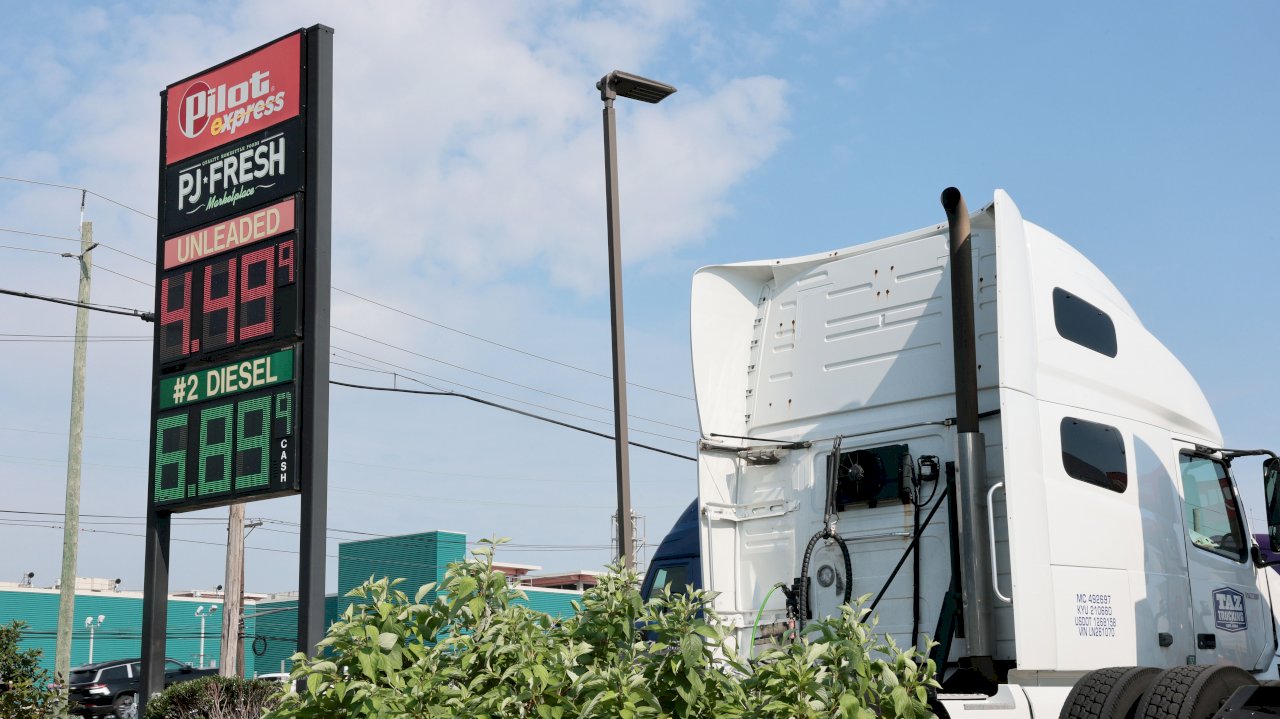
(NEW YORK) — The average price for a gallon of diesel was still hovering around a record-high of $6.43 as of Friday morning, according to the latest data published by GasBuddy.
The historic increase in the price of diesel comes amid continued disruption in the Strait of Hormuz — sparked by the U.S.-Israeli attack on Iran in February — and Russia’s ongoing invasion of Ukraine, which in recent years has seen an intensification of long-range Ukrainian attacks on Russian oil facilities.
The sustained increases in oil and diesel prices have prompted concerns of rising costs across all sectors of the economy — from fuel and energy costs for drivers and homeowners to increased prices of food and travel as producers and companies grapple with narrowing margins.
The nationwide average price for a gallon of regular gas was at $4.47 as of Friday, according to GasBuddy — up $1.53 since the U.S. war with Iran started.
Rising prices are of particular concern for those households reliant on heating oil. They could face winter bills more than 31% higher than last year, according to a report published earlier this week by the non-profit National Energy Assistance Directors Association.
Even for those who do not heat their homes using oil, overall winter heating costs are expected to rise by more than 8.7% this year, the NEADA report said.
As of Friday, oil prices were edging lower but remained above $100 a barrel. Brent crude oil prices, a benchmark for global trading, were around $103 per barrel, down roughly 1.3%. WTI crude oil, used as the North American benchmark, was trading at around $102 per barrel down 0.4%.
Since diesel is the lifeblood of the supply chain, a rise in fuel costs may result in higher prices charged by wholesalers in response to elevated transport expenses. In turn, retailers could pass those costs along to shoppers, raising prices on shelves.
The price hike for any individual item would likely be modest, but the pileup of extra costs across an array of goods could weigh on wallets, analysts previously told ABC News.
As a result, the rise in diesel costs threatens to worsen a surge of inflation set off by the outbreak of the Iran war nearly seven months ago.
The annual inflation rate stood at 3.4% as of August, the most recent month on record, putting inflation more than a percentage point above the Federal Reserve’s target rate of 2%.
On Wednesday, the Federal Reserve raised interest rates for the first time since 2023 in an effort to contain price increases. Higher borrowing costs may constrain spending among businesses and consumers, staunching demand for products and slowing price hikes.
Speaking to reporters on Wednesday, Federal Reserve chair Kevin Warsh acknowledged the rate increase would not directly address the surge in fuel prices. Rather, he said, elevated interest rates could help prevent price hikes from extending throughout the economy.
“We cannot affect any individual price, whether it be oil prices, whether it be food stuffs at the grocery store. But what we can do, and will do, is ensure that any change in relative prices don’t broaden out,” Warsh said.
Copyright © 2026, ABC Audio. All rights reserved.


Top popular

Ingram man charged with murder after fatal shooting

Kerr Crime Stoppers offering reward up to $5,000 for information in last week’s non-viable school threat

KISD asks parents to communicate with children about words and actions after ‘copy cat’ threat note found at middle school

City of Kerrville Parks and Recreation reminds citizens that a Red Flag Warning is in effect until further notice

City of Kerrville says that May 7 General and Special Elections will proceed