Listeners:
Top listeners:
-
 play_arrow
94.3 Rev-FM The Rock of Texas | Where Texas Rocks
-
 play_arrow
99.1 The Buck Texas Country's Number 1 Country
-
 play_arrow
103.7 MikeFM Your Texas Hill Country Mix Tape
-
play_arrow
KERV 1230 AM
-
 play_arrow
JAM Sports 1 JAM Broadcasting Sports 1
-
play_arrow
JAM Sports 2 JAM Broadcasting Sports 2


Epstein associate Ghislaine Maxwell asks court to set aside her conviction
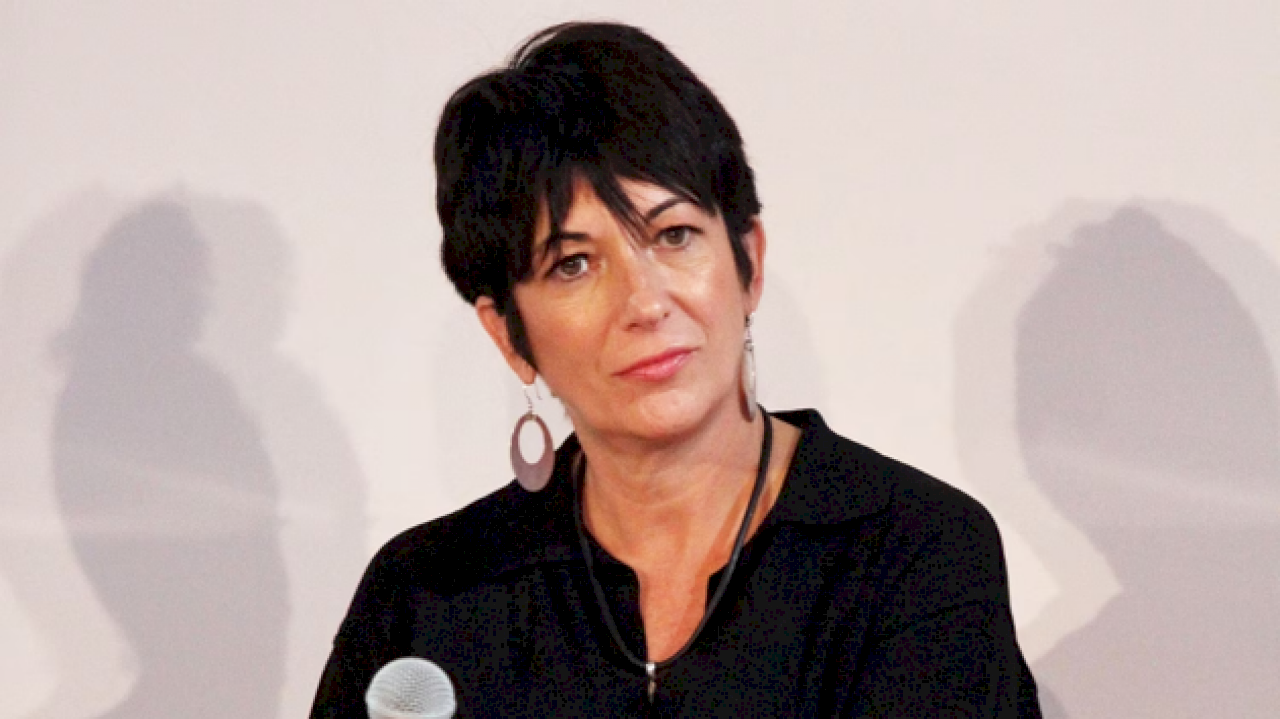
(WASHINGTON) — Ghislaine Maxwell, the convicted co-conspirator of sex offender Jeffrey Epstein, on Wednesday asked a federal court to vacate or correct her conviction and 20-year prison sentence for sex trafficking of minors and other offenses — a move that could complicate the release of the Epstein files as mandated by a new law.
Maxwell has exhausted all of her direct appeals, but filed a petition which contends “substantial new evidence has emerged” demonstrating she did not receive a fair trial, according to Maxwell’s filing in federal court in New York.
“This newly available evidence — derived from litigation against the Federal Bureau of Investigation, various financial institutions, and the Estate of Jeffrey Epstein, as well as from sworn depositions, released records, and other verified sources–shows that exculpatory information was withheld, false testimony presented, and material facts misrepresented to the jury and the Court,” Maxwell wrote in a habeas petition, which she filed “pro se” — without an attorney.
The petition alleges nine separate grounds — including juror misconduct and government suppression of evidence — for Maxwell’s contention that constitutional violations undermined the integrity of her 2021 trial.
“In the light of the full evidentiary record, no reasonable juror would have convicted her. Accordingly, she seeks vacatur of her conviction, an evidentiary hearing, and such other relief as this Court deems appropriate and justice requires,” Maxwell wrote in the 50-page filing, which was submitted to the court in seven separately scanned sections.
There are two gaps in the page numbers, which could be the result of an editing or filing error. After the documents first posted on the electronic case docket Wednesday afternoon, they were briefly taken down before appearing again. Maxwell’s handwritten signature appears at the end of the petition.
Prosecutors in the Southern District of New York declined to comment on Maxwell’s court filing.
Maxwell, 63, was convicted in 2021 — after a three-week trial in Manhattan federal court — of five felonies, including conspiracy, transportation of a minor to engage in illegal sexual activity and sex trafficking of a minor. A higher court rejected her post-trial appeals, and the Supreme Court declined to take up her case.
Many of the issues raised in Maxwell’s petition were addressed either at her trial or by the appellate court. She contends, however, that information and evidence previously unavailable to her and her attorneys has since emerged that should render her conviction “invalid, unsafe, and infirm.”
To prevail in a habeas petition, Maxwell would need to show that serious constitutional violations occurred during her trial or sentencing, or that significant new evidence has emerged demonstrating her innocence. A successful habeas petition could result in a new trial or a reduction of her sentence.
Maxwell’s last-ditch effort for relief from the courts comes as the Justice Department faces a Friday deadline to publicly disclose its investigative files on Epstein and Maxwell in compliance with the Epstein Files Transparency Act, passed by Congress and signed by President Donald Trump last month.
Maxwell’s newly filed petition presents a possible wrinkle in the long-running controversy. The Epstein Files Transparency Act contains exemptions permitting Attorney General Pam Bondi to withhold certain records if their publication could jeopardize active criminal investigations or prosecutions.
Last week, U.S. District Judge Paul Engelmayer granted a DOJ motion to lift restrictions on grand jury transcripts and other nonpublic records from the case, citing the requirement of the newly passed legislation. An attorney for Maxwell had argued that public disclosure of those materials would impact her ability to get a fair retrial if she were to succeed in her bid for a new trial.
“Releasing the grand jury materials from her case, which contain untested and unproven allegations, would create undue prejudice so severe that it would foreclose the possibility of a fair retrial should Ms. Maxwell’s habeas petition succeed,” the lawyers wrote.
Epstein, the wealthy financier and convicted sex offender, died by suicide in a New York jail in 2019.
Maxwell’s habeas submission cites to than 140 exhibits, including post-trial news articles and excerpts from podcasts, books and documentaries about the case in support of her claims of juror misconduct, suppression of evidence and allegedly improper coordination between prosecutors and attorneys for alleged victims. As of Wednesday afternoon, the exhibits had not yet been posted on the electronic docket of the case.
Maxwell devotes a substantial portion of her petition to a claim that the government failed to disclose to her defense team the prior state grand jury testimony of a former Palm Beach police officer who participated in a search of Epstein’s Florida home in 2005.
Retired officer Gregory Parkinson was on the stand for one of the Maxwell trial’s more dramatic moments, when prosecutors carried into the courtroom a green massage table that Parkinson testified was the same one he removed from a bathroom in Epstein’s seaside home following the execution of a search warrant.
Prosecutors said a manufacturer’s label indicating the table was made in California constituted proof of an interstate nexus to the sex-trafficking of a minor — the witness identified at trial as “Carolyn” — which was a critical element of the two most serious charges against Maxwell.
“So when Carolyn … was abused on a massage table that was manufactured in California, that proves that there was at least a minimal effect on interstate commerce, which is all that’s required for this count,” prosecutor Allison Moe said during closing arguments.
But Maxwell contends in her habeas petition that her lack of access to the state grand jury transcripts during her trial deprived her attorneys of the ability to cross-examine the retired officer about his previous sworn testimony. What Parkinson said in 2006, Maxwell argues, “conflicted with his trial testimony” about where the massage table was found and “undermined” the government’s assertions about a critical piece of evidence.
Parkinson’s testimony before the state grand jury in 2006 was made public in 2024 as a result of a lawsuit by the Palm Beach Post and a new state law specifically crafted to allow for the disclosure of the transcripts.
Earlier this year, Maxwell was transferred from a low-security prison in Florida to a minimum-security prison camp for women in Texas. That switch occurred less than two weeks after an unusual meeting in July between Maxwell and Deputy Attorney General Todd Blanche, who previously served as personal counsel to President Trump.
Copyright © 2025, ABC Audio. All rights reserved.
Top popular

Ingram man charged with murder after fatal shooting

Kerr Crime Stoppers offering reward up to $5,000 for information in last week’s non-viable school threat

KISD asks parents to communicate with children about words and actions after ‘copy cat’ threat note found at middle school

City of Kerrville Parks and Recreation reminds citizens that a Red Flag Warning is in effect until further notice

City of Kerrville says that May 7 General and Special Elections will proceed