Listeners:
Top listeners:
-
 play_arrow
94.3 Rev-FM The Rock of Texas | Where Texas Rocks
-
 play_arrow
99.1 The Buck Texas Country's Number 1 Country
-
 play_arrow
103.7 MikeFM Your Texas Hill Country Mix Tape
-
play_arrow
KERV 1230 AM
-
 play_arrow
JAM Sports 1 JAM Broadcasting Sports 1
-
play_arrow
JAM Sports 2 JAM Broadcasting Sports 2


S&P 500 hits record high as US-Iran ceasefire enters second week

(NEW YORK) — The S&P 500 hit a record high on Wednesday as the ceasefire between the U.S. and Iran entered its second week, appearing to boost hopes of a resolution to the Middle East conflict.
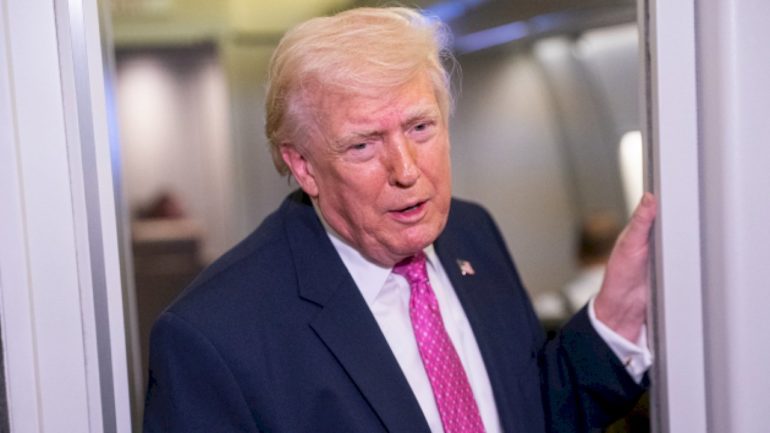
The uptick in markets came hours after President Donald Trump reiterated his desire to wind down the conflict, saying the war is “very close to over” in a portion of an interview with Fox News’ Maria Bartiromo that aired on Tuesday.
The S&P 500 climbed 0.5% on Wednesday, registering at 7,005.78 points. The index reached a previous high of 7,002.28 points on Jan. 28.
The Dow Jones Industrial Average fell 125 points, or 0.2%, while the tech-heavy Nasdaq increased 1.1%.
Markets have swung dramatically over the weeks following the start of the U.S.-Israel attacks on Iran on Feb. 28, as investors weathered a historic global oil shock and digested mixed signals from Trump.
Stocks moved higher on a largely consistent basis in April, however, in response to an apparent willingness on the part of both sides to end fighting and negotiate a temporary truce.
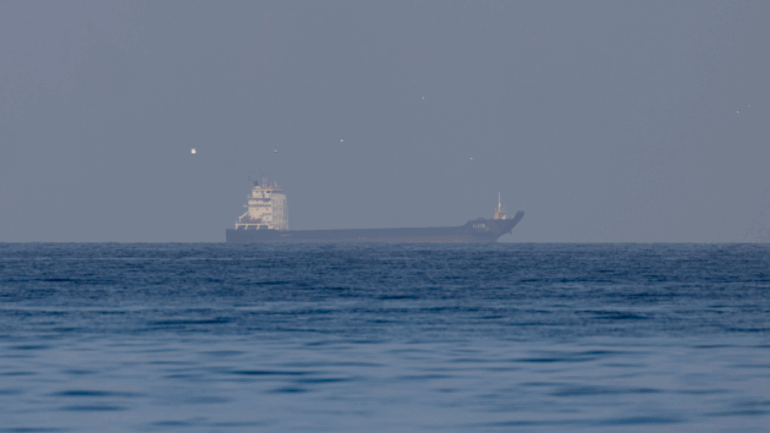
The U.S. continues to mount a naval blockade of Iranian ports in the Strait of Hormuz, exerting pressure on Tehran by choking off a key source of revenue.
On Wednesday, the commander of the Khatam Al-Anbiya Central Headquarters of Iran’s armed forces said the U.S. blockade of Iranian ports is a “violation of the ceasefire,” in a statement published by the official Islamic Republic News Agency.
The war prompted Iran’s effective closure of the Strait of Hormuz, a critical waterway that facilitates the transport of about one-fifth of the global supply of oil and natural gas.
The disruption amounted to the “most severe oil supply shock in history,” the International Energy Agency (IEA) said in a new report on Tuesday. Oil and gasoline prices soared, prompting some economists to warn of a possible recession.
U.S. oil prices have fallen from a recent peak achieved in the early days of the war, but costs remain nearly 40% higher than pre-war levels.
U.S.-Iran talks in Pakistan over the weekend failed to secure a peace deal. Trump said that Iran’s alleged unwillingness to abandon its nuclear program was the key sticking point, and that the U.S. would respond with a blockade of the Strait of Hormuz, which began Monday.
Israel, meanwhile, has continued ground operations and intense strikes in Lebanon, where it is engaged with the Iran-backed Hezbollah militia. Israeli Prime Minister Benjamin Netanyahu said he supported the ceasefire with Iran, but that Lebanon was not covered by the agreement, despite Iranian protests.
ABC News’ David Brennan, Meredith Deliso, and Nadine El-Bawab contributed to this report.
Copyright © 2026, ABC Audio. All rights reserved.
Top popular

Ingram man charged with murder after fatal shooting

Kerr Crime Stoppers offering reward up to $5,000 for information in last week’s non-viable school threat

KISD asks parents to communicate with children about words and actions after ‘copy cat’ threat note found at middle school

City of Kerrville Parks and Recreation reminds citizens that a Red Flag Warning is in effect until further notice

City of Kerrville says that May 7 General and Special Elections will proceed