Listeners:
Top listeners:
-
 play_arrow
94.3 Rev-FM The Rock of Texas | Where Texas Rocks
-
 play_arrow
99.1 The Buck Texas Country's Number 1 Country
-
 play_arrow
103.7 MikeFM Your Texas Hill Country Mix Tape
-
play_arrow
KERV 1230 AM
-
 play_arrow
JAM Sports 1 JAM Broadcasting Sports 1
-
play_arrow
JAM Sports 2 JAM Broadcasting Sports 2


US experienced its 2nd warmest winter on record despite a cold and snowy Northeast
(NEW YORK) — Cold and snowy conditions dominated the winter season in the Northeast with much of the region experiencing its coldest winter in a decade or more, and several cities seeing their biggest snowfall in years. However, if you live in other parts of the country, this winter was very different.
Meteorological winter — December to February — was unseasonably warm across much of the contiguous U.S., ranking as the second-warmest winter on record since 1895, behind the 2023-24 season, according to a new report from the National Oceanic and Atmospheric Administration (NOAA).
While the Northeast faced persistent blasts of bitter cold and snow, exceptional winter warmth in the West nearly pushed the nation to a new all-time high for the season.
Nine states finished off with their warmest winter on record: Arizona, Colorado, New Mexico, Nevada, Texas, Oklahoma, Oregon, Utah and Wyoming. Dozens of cities in the West and Plains saw a top 5 warmest winter with cities such as Albuquerque, Phoenix, Las Vegas, and Salt Lake City seeing their all-time warmest.
Dallas, Texas, recorded 16 days with high temperatures of at least 80°F, the highest seasonal total on record.
For much of the country, winter was not only exceptionally warm, but exceptionally dry, ranking as the driest winter in 45 years across the Lower 48. Much of the western United States entered the season already grappling with drought, and persistent warmth fueled the worst snow drought in decades across parts of the Rockies as more precipitation fell as rain instead of snow.
Drought on its own already stresses water supplies, agriculture, and ecosystems. But when winter fails to deliver significant mountain snow, those impacts can intensify, according to NOAA.
A persistent snow drought can trigger a cascade of hydrologic changes. Low snowpack and early snowmelt can affect vegetation, reduce surface and subsurface water storage and alter streamflow, all of which directly impact water management and planning across the West.
Snowmelt supplies a large share of the region’s water used by communities, agriculture, and ecosystems. In some states, up to about 75 percent of water supplies can come from melting snow, according to the USGS.
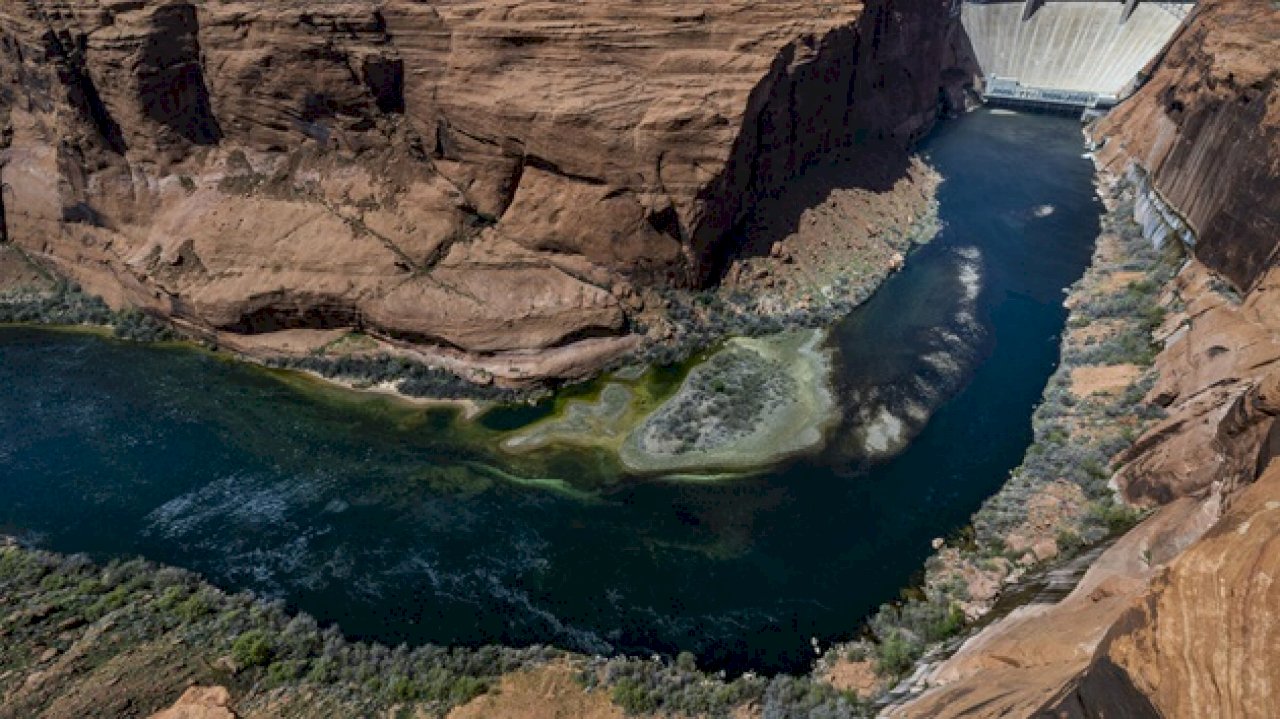
The Colorado River provides water for more than 40 million people and fuels hydropower resources in seven states: California, Arizona, Nevada, Colorado, New Mexico, Utah and Wyoming, according to the Bureau of Reclamation.
Widespread, persistent drier-than-average conditions also impacted parts of the Heartland and Southeast, bringing drought expansion and intensification during the winter months. Multiple states, including Arkansas, Missouri, Illinois and Nebraska, experienced one of their driest winters on record.
According to the latest U.S. Drought Monitor report released on March 5, more than half of the contiguous U.S. is experiencing drought conditions, an increase of about 10% from the beginning of February.
Florida is enduring its worst drought in 25 years, according to the National Integrated Drought Information System, with a heightened risk of wildfires this spring as conditions worsen across the state.
All of Florida is currently experiencing some level of drought, with more than 70% of the state facing an extreme drought level 3 of 4, U.S. Drought Monitor data shows.
“We expect the drought to continue or even worsen in the next couple of months, as we are in the heart of peninsular Florida’s dry season that usually lasts until mid-May,” Florida State Climatologist David Zierden told ABC News. “Then the summer convective rains kick in and provide some relief.”
The National Interagency Fire Center says Florida faces an above-average risk of significant wildland fires throughout meteorological spring, which began on March 1. Dozens of counties across the state have issued burn bans due to the ongoing drought and elevated wildfire risk.
The worsening conditions are raising concerns beyond wildfires, including impacts to water supplies and agriculture.
“Four of the five Water Management districts have either voluntary or mandatory water restrictions limiting outdoor irrigation,” Zierden added. “Range and pasture for cattle is the agricultural commodity that is hit hardest right now.”
Copyright © 2026, ABC Audio. All rights reserved.

Top popular

Ingram man charged with murder after fatal shooting

Kerr Crime Stoppers offering reward up to $5,000 for information in last week’s non-viable school threat

KISD asks parents to communicate with children about words and actions after ‘copy cat’ threat note found at middle school

City of Kerrville Parks and Recreation reminds citizens that a Red Flag Warning is in effect until further notice

City of Kerrville says that May 7 General and Special Elections will proceed