Listeners:
Top listeners:
-
 play_arrow
94.3 Rev-FM The Rock of Texas | Where Texas Rocks
-
 play_arrow
99.1 The Buck Texas Country's Number 1 Country
-
 play_arrow
103.7 MikeFM Your Texas Hill Country Mix Tape
-
play_arrow
KERV 1230 AM
-
 play_arrow
JAM Sports 1 JAM Broadcasting Sports 1
-
play_arrow
JAM Sports 2 JAM Broadcasting Sports 2


Why the US is pushing for the end of Cuban medical missions
(NEW YORK) — For more than 60 years, hundreds of thousands of Cuban health care workers have been deployed across the globe.
Under the government’s medical missions program, doctors, nurses, technicians and other staff are sent to countries around the world to provide care to underserved communities, in many cases for a fee.
The Cuban government has said the missions, or “medical brigades,” have entered countries at war, hit by natural disasters and ravaged by outbreaks of disease, saving thousands of lives.
Critics, including the Trump administration, have held a different view, claiming that the health professionals are coerced into volunteering, partly as a way to bring in much-needed currency, and that their movements are restricted. The U.S. State Department has referred to the missions as “forced labor” and has pressured countries to stop accepting Cuban medical workers.
“The Trump administration, Biden administration and U.N. have all understood that these medical mission programs are a forced labor scheme that exploit Cuban workers,” White House principal deputy press secretary Anna Kelly said in a statement to ABC News. “These labor export programs abuse the participants, enrich the corrupt Cuban regime and deprive everyday Cubans of essential medical care that they desperately need in their homeland.
Kelly noted President Donald Trump believes “Cuba is a disaster that’s in its last moments of life, and these programs are one of many ways that they repress their own people.”
Cuba’s Ministry of Foreign Affairs did not return multiple requests for comment from ABC News.
A White House official told ABC News there is vast opposition to the Cuban medical missions program across political parties, in both chambers of Congress and from international organizations.
The humans rights organization Prisoners Defenders said in 2020 that it submitted a report to the United Nations and the International Criminal Court claiming it has evidence of “a pattern of slavery” on the medical missions.
Countries including the Bahamas, Guatemala, Guyana, Honduras, St. Vincent and the Grenadines and Paraguay have begun phasing out the missions, reviewing medical cooperation agreements or canceling contracts with the Cuban government.
Some international relations experts told ABC News that there is some truth to the allegations that Cuban medical workers are often closely monitored by Cuba’s government, but that the medics are also providing care to communities that would otherwise not receive it.
History of the program
After the Cuban Revolution began in 1959, many doctors left Cuba for the U.S. Newly installed leader Fidel Castro saw an opportunity to set up programs to train doctors not just for Cuba but to be sent overseas as a type of medical diplomacy, according to John Kirk, a professor emeritus of Latin American Studies at Dalhousie University In Halifax, Nova Scotia, who has written several books on Cuba.
The first medical mission was a small team of doctors sent to Chile, which experienced the strongest earthquake ever recorded in 1960. The first medical brigade was sent to Algeria in May 1963. In the 1970s, medical missions expanded greatly to Latin America and Africa.
Some countries, like Gambia or Haiti — which are poorer — pay Cuba nothing for medical care, according to Kirk. However, richer countries such as Qatar pay the Cuban government a monthly fee, about 25% of which is given to the Cuban medical workers themselves, he noted. Qatar pays Cuba about $9,000 to $10,000 a month for these services, Kirk said.
Cuba’s Ministry of Foreign Affairs did not immediately reply to ABC News’ request for comment on how much countries pay Cuba for the service of medical workers.
Between 1960 and 2023, 600,000 doctors, nurses and technicians participated in this program in 165 different countries, according to the Cuban government.
As of 2024, Cuba had 54 brigades with more than 22,600 medical workers, according to Granma, the official newspaper of Cuba’s communist party.
Philip Brenner, a professor emeritus in the School of International Service at American University, with expertise in U.S.-Cuba relations, said one example of Cuba’s program was Operación Milagro in Venezuela, launched in 2004, to provide ophthalmology services.
“More than 1 million people regained eyesight, and it wasn’t a major operation,” Brenner told ABC News. “These were like cataracts that people had, but they had no access to medical care until the Cuban doctors came in. They served an enormous number of people around the world.”
Criticism of the program
The U.S. government has long been critical of the Cuban medical missions program, claiming health care professionals are forced into it and sending workers overseas deprives Cubans of the medical care they need at home.
In August, the State Department revoked visas and imposed visa restrictions on several Brazilian government officials, former Pan American Health Organization officials and their family members due to “complicity” with the Cuba’s “labor export scheme.”
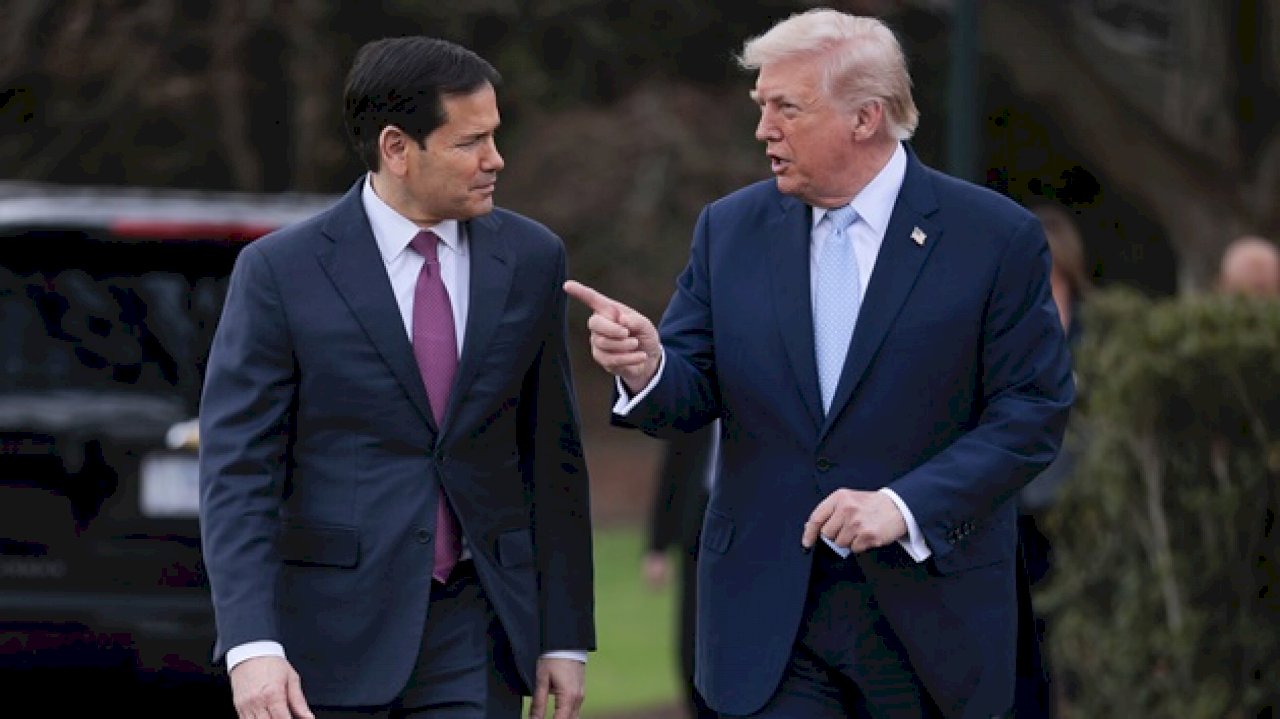
“These officials were responsible for or involved in abetting the Cuban regime’s coercive labor export scheme, which exploits Cuban medical workers through forced labor,” Secretary of State Marco Rubio said in a statement.
Brazil’s government did not respond to the allegations but Brazilian President Luiz Inácio Lula da Silva revoked the visa of a U.S diplomat who sought to visit former President Jair Bolsonaro. Lula said the measure was reciprocal for the U.S. revoking visas in August, according to the Associated Press.
The Cuban government did not reply to ABC News’ requests for comment on these claims.
Kirk, the Dalhousie professor emeritus, said of the 270 Cuban medical professionals that he interviewed, most said they volunteered and were not forced to partake in these missions, but he acknowledged it doesn’t mean they weren’t forced.
Sebastián Arcos, interim director of the Cuban Research Institute at Florida International University, said no one is physically forced to participate in these missions, but the conditions in Cuba push many to work in the program to try and earn some money to support their families.
“The other [thing] is, once you participate, once you volunteer for one of these missions, you earn credits with the Cuban regime,” he told ABC News. “Any kind of acknowledgement or respect that you can get from the Cuban government will help your career.”
Arcos said he is familiar with the experiences of those on missions because his wife’s sister, Karem Montiel, was part of a Cuban medical brigade in Eritrea, Africa.
Montiel told ABC News she used to teach embryology at the University of Medical Sciences in Havana and was selected to join a medical brigade in 2010 to teach at Eritrea’s Orotta School of Medicine.
She said she had a good relationship with her students, but criticized the Cuban government’s involvment in the program .
“That is nothing else but slavery, 21st century slavery,” she said. “I was the one doing the work but [the Cuban government is] the one who gets the money. … They own all the Cuban doctors. They make the money, they get paid for those doctors being there, working, and they pay the doctors the bare minimum.”
Montiel said that working as a doctor in Cuba, she was paid the equivalent of $23 per month. She said she was paid more to go on a medical mission but the salary is deposited in a bank account in Cuba, which doctors cannot access until they return to the country.
According to Montiel, the chief of the medical brigade holds on to everybody’s passports. She added that the chief of her mission also accompanied all staff to any immigration appointments they had.
According to Montiel, there are two reasons doctors go on the medical missions: either to get more money and buy things they are unable to buy in Cuba — like computers or TVs — or to attempt to escape Cuba.
Montiel did the latter and left her medical mission early, defecting to the U.S. in December 2010.
“Nobody goes [on medical missions] for the humanitarian reasons to help out the people in need, or the poor people who do not have access to health care,” she said.
She now works as a nurse practitioner in Miami, and her husband and two children have since joined her.
Arcos is also skeptical that the Cuban government is performing the medical missions for purely humanitarian purposes.
“The Cuban government is not really trying to help other people who are less fortunate,” he said. “This is a business for them. They are making money. They are gathering intelligence. They are influencing other governments, and all of this is done on the backs of hardworking people.”
Why is the US ramping up pressure?
For the last several months, the Trump administration has been increasing pressure on governments that receive Cuban medical personnel.
The federal government warned that it could impose sanctions against governments that accept the health workers. The administration said that the program is “exploitative,” with workers forcibly separated from their families, subjected to surveillance, given little pay and under threat if they don’t return to Cuba.
Several countries have recently pulled out of agreements and some that haven’t said the U.S. is pushing them to do so.
During the Second World Congress on Racial and Ethnic Health Disparities in January, Prime Minister Philip Pierre of Saint Lucia said he’s faced pressure from the U.S. government over not having the Caribbean island’s medical students be trained in Cuba.
“We also have Cubans who come over to work. So, the American government has said we can’t even train them in Cuba. So, I have a major issue on my hand,” Pierre said, according to local reports.
In a statement on Facebook last month, the U.S. Embassy to Barbados, the Eastern Caribbean and the inter-governmental Organisation of Eastern Caribbean States denied speaking with Saint Lucia’s government about international education.
“The United States continues to call for an end to exploitation and forced labor in the illegitimate Cuban regime’s overseas medical missions program,” the embassy wrote.
Kirk and Brenner say the U.S. has signaled in the past that it is looking for a regime change in Cuba and placing a stranglehold on the economy may help achieve that objective.
Both said they believe that stranglehold can be maintained through the energy blockade, which has been in place since January, and by cutting a major source of income for Cuba: the medical missions program.
“Because Cuba does earn hard currency from some of the doctors being sent abroad, one of the ways in which the United States has tried to strangle the Cuban economy is by getting countries to end their medical programs with Cuba,” Brenner said. “Even though those medical programs have benefited the people in those countries, the goal has been very narrow: one of trying to hurt Cuba. And it’s been very effective; it’s one of the ways in which Cuba has lost hard currency.”
What will happen to counties that pull out?
For countries that pulled out of Cuba’s program, the experts said they expect to see worsening health conditions.
“We’d have to expect to see more chronic disease and more people dying from disease that otherwise they wouldn’t die from because of the lack of help from Cuba,” Brenner, from American University’s School of International Service, said.
He added that it doesn’t seem like the U.S. has the means to replace the hole that may be left behind by Cuba, especially with the dismantling of the U.S. Agency for International Development (USAID).
“The United States had previously provided some assistance to these countries through USAID but, under [the Department of Government Efficiency], USAID was essentially destroyed, and the medical programs that the United States had haven’t been resumed,” Brenner said.
Not all counties are pulling out of agreements, however. Mexican President Claudia Sheinbaum said on Wednesday that she will keep an agreement with Cuba’s government and continue to have Cuban doctors working in Mexico.
Kirk noted that Mexico currently has about 3,000 Cuban medics in the county. He added that if Mexico does pull out of its agreement with Cuba, it will be “a major blow, symbolically, politically and financially.”
Copyright © 2026, ABC Audio. All rights reserved.
Top popular

Ingram man charged with murder after fatal shooting

Kerr Crime Stoppers offering reward up to $5,000 for information in last week’s non-viable school threat

KISD asks parents to communicate with children about words and actions after ‘copy cat’ threat note found at middle school

City of Kerrville Parks and Recreation reminds citizens that a Red Flag Warning is in effect until further notice

City of Kerrville says that May 7 General and Special Elections will proceed