Listeners:
Top listeners:
-
 play_arrow
94.3 Rev-FM The Rock of Texas | Where Texas Rocks
-
 play_arrow
99.1 The Buck Texas Country's Number 1 Country
-
 play_arrow
103.7 MikeFM Your Texas Hill Country Mix Tape
-
play_arrow
KERV 1230 AM
-
 play_arrow
JAM Sports 1 JAM Broadcasting Sports 1
-
play_arrow
JAM Sports 2 JAM Broadcasting Sports 2


Kennedy restores staffing at 9/11 health program ahead of Capitol Hill testimony
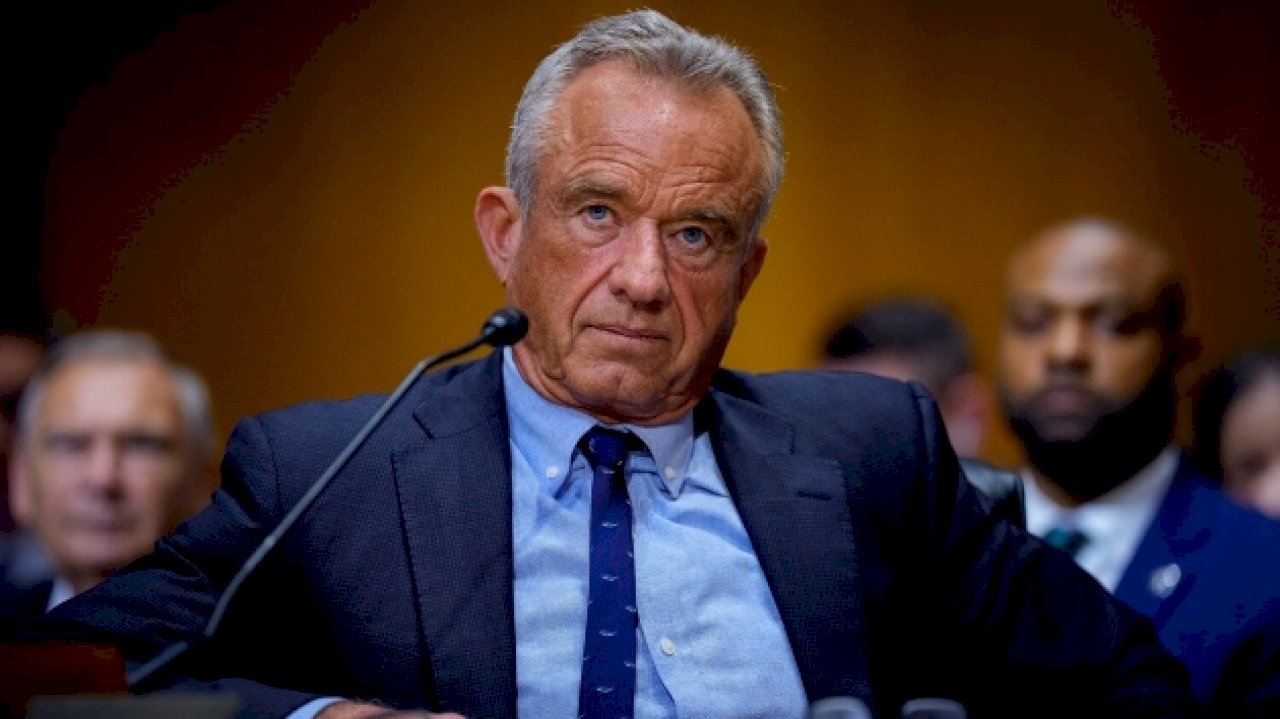
(WASHINGTON) — Health and Human Services Secretary Robert F. Kennedy Jr. heads to Capitol Hill Thursday after restoring staffing at the World Trade Center Health Program, a move that could ease one of the most persistent points of bipartisan criticism he has faced for months.
Program advocates and lawmakers said they received an email from the secretary on Wednesday approving hiring for 37 long-vacant positions. This will raise staffing from its current 83 employees to the federally authorized level of 120.
The move comes after nearly a year of bipartisan criticism that staffing shortages were slowing care for the 140,000 responders and survivors the program serves, many of whom have been diagnosed with cancer, respiratory disease and other conditions tied to exposure to toxins after the 9/11 terror attacks in New York, Shanksville, Penn., and Washington, D.C.
The World Trade Center Health Program was created as part of the James Zadroga 9/11 Health and Compensation Act to provide long-term medical monitoring and treatment to those affected by the attacks. For more than a year, the program has operated far below capacity with about 83 staff members, following a period of upheaval that included firings, rehires and shifting leadership, even as the participant population grew by nearly 30,000 new enrollees.
Advocates say the reduced staffing has had real consequences, including slower approval of survivors into the program, delays in managing contractors, and longer wait times for care.
“This is progress,” Benjamin Chevat, executive director of Citizens for the Extension of the James Zadroga Act, told ABC News. He credited the progress to sustained pressure from lawmakers in both parties and their consistent support of the program.
Lawmakers also have welcomed the end of the hiring freeze.
Rep. Andrew Garbarino, R-N.Y., told ABC News that the approval for the additional staff would “directly support the responders and survivors who rely on this care every day,” and that “more staff means better access to care, shorter wait times, and stronger support for those still living with the health impacts” of the attacks.
He called the move “real progress for the 9/11 community” and said it is “about making sure those who answered the call on September 11th get the care they have earned.”
Rep. Dan Goldman, D-N.Y., also welcomed the news but criticized the delays. “I am encouraged that, after repeated demands from me and from other members of Congress, Secretary Kennedy is finally increasing staffing at the World Trade Center Health Program so that our brave survivors and first responders can receive the quality health care they deserve,” Goldman told ABC News.
“The ongoing staffing shortages under this administration are unacceptable and have been undermining the program’s ability to provide timely and quality care to the enrollees,” Goldman added. “I will be watching closely to ensure that new staffers are hired as quickly as possible and that our heroes receive the quality healthcare they were promised and deserve.”
At a senate hearing last May, Kennedy acknowledged that “we made a couple of mistakes” in firing program staff and promised to address them.
“Under Secretary Kennedy’s leadership, the World Trade Center Health Program continues to move forward and deliver for responders and survivors,” a spokesperson for the Department of Health and Human Services told ABC News in response to a request for comment. “The approval of these positions reflects HHS’ commitment to strengthening the program. The petition reviews are proceeding through established processes, and work is actively underway to advance pending petitions. Protecting the health and well-being of those affected by 9/11 remains a top priority.”
Chevat pointed out the timing of the decision, which comes as Kennedy prepared to face lawmakers at Thursday’s public hearing: “Now a year later he is finally letting the program fill the staff vacancies that the program was blocked from filling.”
In a previous statement to ABC News, HHS spokesperson Andrew Nixon said decisions about the program, including staffing and whether to add new health conditions to be covered under the program, rest with the World Trade Center Health Program administrator, not Secretary Kennedy.
Even with the staffing issue moving toward resolution, significant concerns for the program remain, Chevat said. They include key decisions about expanding coverage for additional conditions including autoimmune, cardiac, and cognitive disorders are still pending – for years, in some cases.
Those decisions ultimately require sign-off within HHS, under Kennedy’s direction, according to Chevat. Until that happens, patients with those conditions don’t qualify for full coverage through the program.
Research funding for the program also remains stalled, according to Chevat. Its annual grant cycle, which typically distributes about $20 million for studies on 9/11-related illnesses, is still waiting for approval, despite the understanding that it would begin this past February, he said.
Additionally, communication between the program and the 9/11 community has been sparse under HHS oversight, with fewer updates and less clarity about decision-making, according to Chevat and other 9/11 survivor advocates.
Lawmakers are still likely to ask Kennedy questions about the World Trade Center Health Program during today’s hearings, Chevat said. The research funding budget is also expected to come up during a Senate Health, Education, Labor and Pensions Committee hearing next week.
For now, however, the decision to restore program staffing removes one of the most visible and widely criticized problems, Chevat said.
Copyright © 2026, ABC Audio. All rights reserved.

Top popular

Ingram man charged with murder after fatal shooting

Kerr Crime Stoppers offering reward up to $5,000 for information in last week’s non-viable school threat

KISD asks parents to communicate with children about words and actions after ‘copy cat’ threat note found at middle school

City of Kerrville Parks and Recreation reminds citizens that a Red Flag Warning is in effect until further notice

City of Kerrville says that May 7 General and Special Elections will proceed