Listeners:
Top listeners:
-
 play_arrow
94.3 Rev-FM The Rock of Texas | Where Texas Rocks
-
 play_arrow
99.1 The Buck Texas Country's Number 1 Country
-
 play_arrow
103.7 MikeFM Your Texas Hill Country Mix Tape
-
play_arrow
KERV 1230 AM
-
 play_arrow
JAM Sports 1 JAM Broadcasting Sports 1
-
play_arrow
JAM Sports 2 JAM Broadcasting Sports 2


RFK Jr. releases new dietary guidelines with emphasis on protein and full-fat dairy, less processed foods
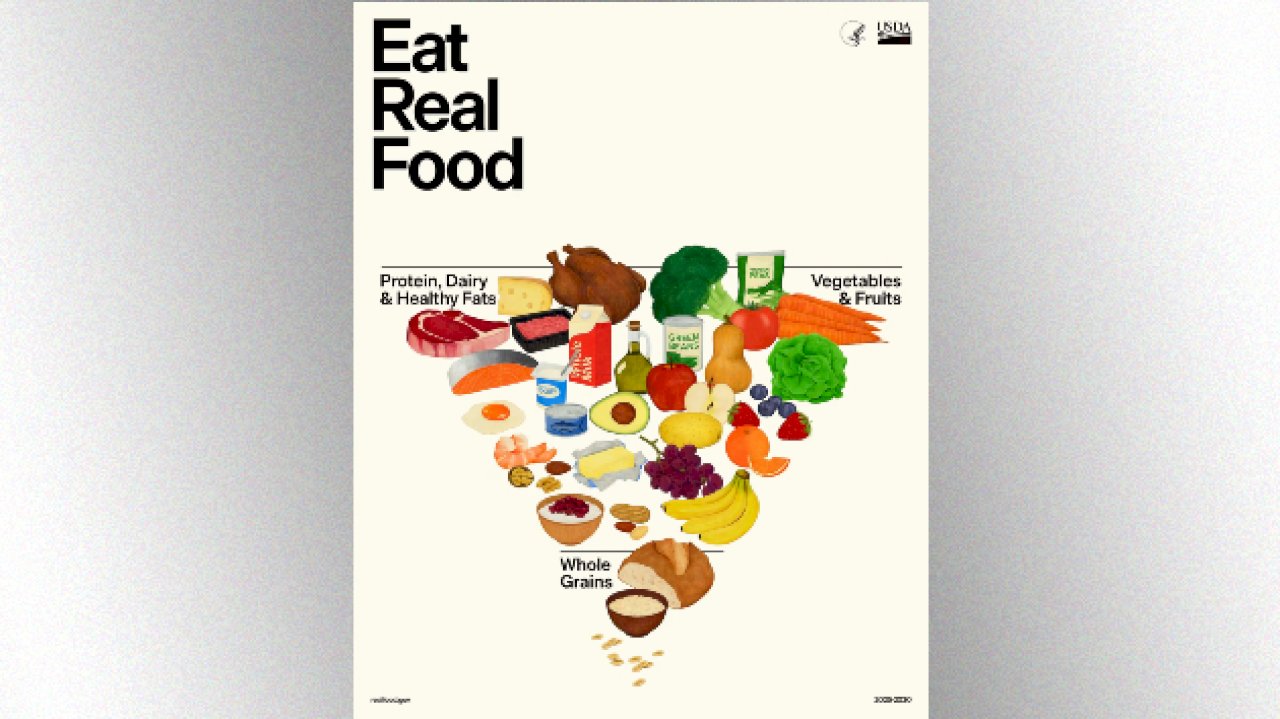
(WASHINGTON) — Health and Human Services Secretary Robert F. Kennedy Jr. announced new federal dietary guidelines on Wednesday, encouraging Americans to limit highly processed food and reduce refined carbohydrates.
The guidelines also encourage Americans to eat whole foods like fruits and vegetables, incorporate healthy fats, prioritize protein-rich meals including red meat, and consume full-fat dairy with no added sugars.
The new Dietary Guidelines for Americans, which are updated every five years, comes as Kennedy has made nutrition policy a cornerstone of his Make America Healthy Again agenda.
The administration also released an image of an updated food pyramid to match the guidelines.
“These new guidelines will revolutionize our nation’s food culture and make America healthier again,” Kennedy said during a press conference at the White House alongside Secretary of Agriculture Brooke Rollins and other health officials.
For the first time, the Dietary Guidelines explicitly warned Americans against certain highly processed foods and suggests avoiding “packaged, prepared, ready-to-eat, or other foods that are salty or sweet” and “sugar-sweetened beverages, such as soda, fruit drinks, and energy drinks.”
Kennedy has previously called for restrictions on ultra-processed foods as part of an initiative to address the high rates of chronic disease in the U.S.
The health secretary also said the updated guidelines will place an emphasis on incorporating saturated fats into diets.
“We are ending the war on saturated fats,” Kennedy said. “My message is clear. Eat real food, nothing matters more for health care outcomes, economic productivity, military readiness and physical stability.”
The guidelines states that when adding fats to meals, “prioritize oils with essential fatty acids, such as olive oil. Other options can include butter or beef tallow,” the latter which has been touted by Kennedy in the past.
Health experts have previously stated that there are benefits of good fats, such as those found in some nuts and vegetables, while warning that too much saturated fats are a health risk.
The American Heart Association warns that saturated fats can increase the risk of high cholesterol, which can increase the risk of heart disease.
Additionally, the guidelines state that “no amount of added sugars or non-nutritive sweeteners” is part of a healthy diet and calls on parents to completely avoid added sugar and artificial sweeteners for children aged four and under.
The guidelines also say Americans should “limit alcoholic beverages.” Previously, guidelines recommended adults aged 21 and older should stick to two drinks or fewer per day for men and one drink or less per day for women.
Dr. Mehmet Oz, administrator of the Centers for Medicare & Medicaid Services, said during the press conference that there was “never good data” to support the previously recommended level of alcohol consumption.
In addition, guidelines call for “high-quality, nutrient-dense” proteins with every meal such as red meat, poultry, seafood and eggs. For those who prefer plant-based options, this includes beans, peas, lentils, legumes, nuts, seeds and soy.
A factsheet claimed that previous federal dietary guidelines have “demonized” protein in favor of carbohydrates.
“Protein was never demonized in U.S. dietary guidelines. As it is, Americans are consuming protein in amounts well above the amount that is necessary to sustain health and development,” Marie-Pierre St-Onge, a professor at Columbia University Nutrition, told ABC News.
The guidelines, issued by HHS and the Department of Agriculture, provide Americans with dietary advice to promote health and prevent disease.
Although the federal government has provided such advice to Americans for at least a century, the guidelines in their current form have existed since 1980.
Previous releases include the introduction of the food pyramid in 1992 and its replacement, MyPlate, in 2011.
The guidelines are also the foundation for all federal food programs, such as school lunches; the Women, Infants and Children program; and Head Start, as well as meals for active-duty service members and veterans who rely on Veterans Affairs hospitals.
The guidelines were lauded by medical groups such as the American Medical Association (AMA) and the American Heart Association (AHA).
“The American Medical Association applauds the Administration’s new Dietary Guidelines for spotlighting the highly processed foods, sugar-sweetened beverages, and excess sodium that fuel heart disease, diabetes, obesity, and other chronic illnesses,” Dr. Bobby Mukkamala, AMA’s president, said in a statement. “The Guidelines affirm that food is medicine and offer clear direction patients and physicians can use to improve health.”
The AHA said in a statement that it welcomes the new dietary guidelines and its emphasis on fruits and vegetables while limiting highly processed foods and added sugars.
However, regarding protein, the AHA said it encourages prioritizing plant-based proteins, seafood and lean meats and to limit high-fat animal products including red meat, butter, lard and tallow, which are linked to increased cardiovascular risk.”
ABC News’ Nicholas Kerr and Liz Neporent contributed to this report.
Copyright © 2026, ABC Audio. All rights reserved.


Top popular

Ingram man charged with murder after fatal shooting

Kerr Crime Stoppers offering reward up to $5,000 for information in last week’s non-viable school threat

KISD asks parents to communicate with children about words and actions after ‘copy cat’ threat note found at middle school

City of Kerrville Parks and Recreation reminds citizens that a Red Flag Warning is in effect until further notice

City of Kerrville says that May 7 General and Special Elections will proceed